
You’ve heard about the free monthly ration kit for pregnant women in Gujarat. Maybe your Anganwadi worker mentioned it, or a neighbour received it. But when you tried to find out how to get it yourself, you hit the usual wall: a government portal asking for Aadhaar validation, an Anganwadi centre giving you a different answer each visit, and no clear list of what you actually need to bring. Meanwhile, the first trimester — when nutrition matters most — is passing.
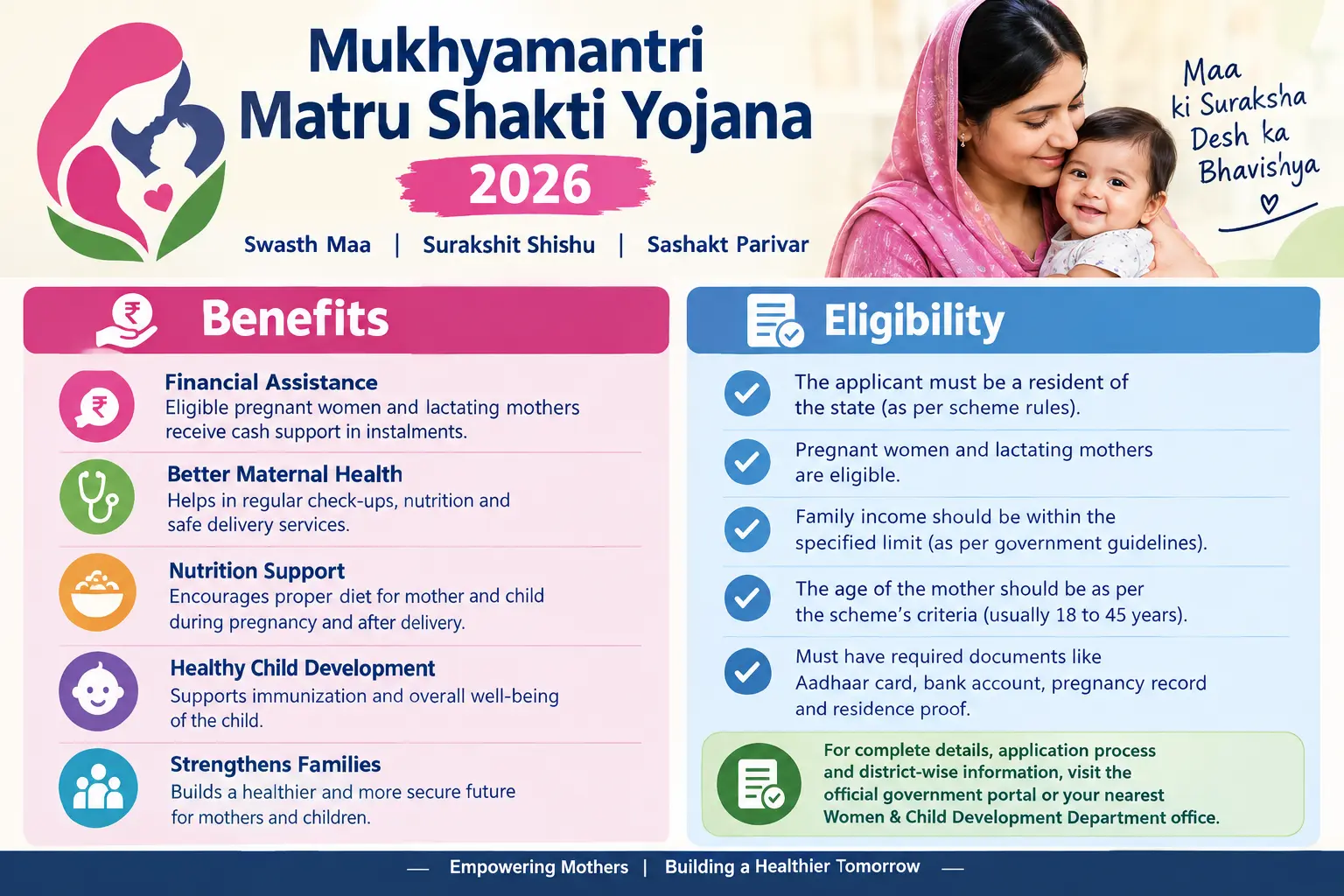
The Mukhyamantri Matru Shakti Yojana is Gujarat’s answer to maternal malnutrition, and it is built to reach women like you during the first 1,000 days from conception to a child’s second birthday. This article cuts through the confusion. It covers what the scheme actually provides, who qualifies, how to register online without getting stuck, and the documents you should keep ready before you start.
Discover More About:👇
Namo Shree Yojana Gujarat 2026: Benefits, Eligibility & Apply
What the Mukhyamantri Matru Shakti Yojana Provides and Why It Exists
The scheme, also referred to as the 1000 Days Mukhyamantri Matrushakti Yojana, was launched on 18 June 2022. It runs through the Women and Child Development Department and is delivered via the ICDS network — the same Anganwadi centres that handle supplementary nutrition, immunisation tracking, and pre-school education.
Its core purpose is straightforward. Pregnant and lactating women in Gujarat often lack consistent access to protein-rich foods. Anaemia and undernutrition during pregnancy contribute to low birth weight and developmental delays. Rather than a cash transfer — which can be diverted or spent on non-food items — the scheme provides a physical nutrition kit every month. The kit is free. You collect it from your local Anganwadi centre after registering online.
The focus on the first 1,000 days is not arbitrary. That window — roughly from conception through age two — is when rapid brain development and organ formation occur. Nutritional gaps during this period have effects that are difficult to reverse later.
What’s Inside the Monthly Nutrition Kit
The kit is designed around staple foods that are already part of a Gujarati household’s diet. Based on scheme information, a typical monthly kit includes:
| Item | Approximate Quantity |
|---|---|
| Groundnut Oil | 1 litre |
| Tuver Dal (pigeon pea) | 1 kg |
| Chana (chickpeas) | 2 kg |
The kit is valued at around ₹2,000 per pregnancy and is provided for the first and second pregnancies. It is delivered monthly at the Anganwadi centre.
The exact contents and quantities may be revised from time to time. Check the official 1000 Days portal or ask your Anganwadi worker for the current kit composition. Do not rely on last year’s list.
Beyond the physical items, the scheme provides something less tangible but equally important: a regular touchpoint with the health system. Each monthly collection is an opportunity for the Anganwadi worker to check your weight, review your antenatal care card, and flag any complications that need a doctor’s attention.
Who Qualifies — Eligibility in Plain Terms
The scheme is not universal. It targets a specific group:
- Residency: You must be a permanent resident of Gujarat.
- Pregnancy or Lactation Status: You should either be pregnant for the first time, or be the mother of a first-born child under two years of age. Women pregnant with their second child generally do not qualify for this particular scheme.
- Health System Registration: You must be registered for antenatal care (ANC) or have your child’s birth recorded in the state health system. In practice, this means your pregnancy should be recorded with the Health Department or your child’s birth registered through the civil registration system.
The scheme is intended to cover women who appear in the Health Department’s software as pregnant, or mothers of children up to two years old. If you have not yet registered your pregnancy with a government health facility or your Anganwadi centre, do that first — it is usually a prerequisite for the scheme’s registration to go through.
Eligibility rules can change. Confirm your specific case with your Anganwadi centre or on the official portal before assuming you qualify or do not qualify.
How to Register Online — Step by Step
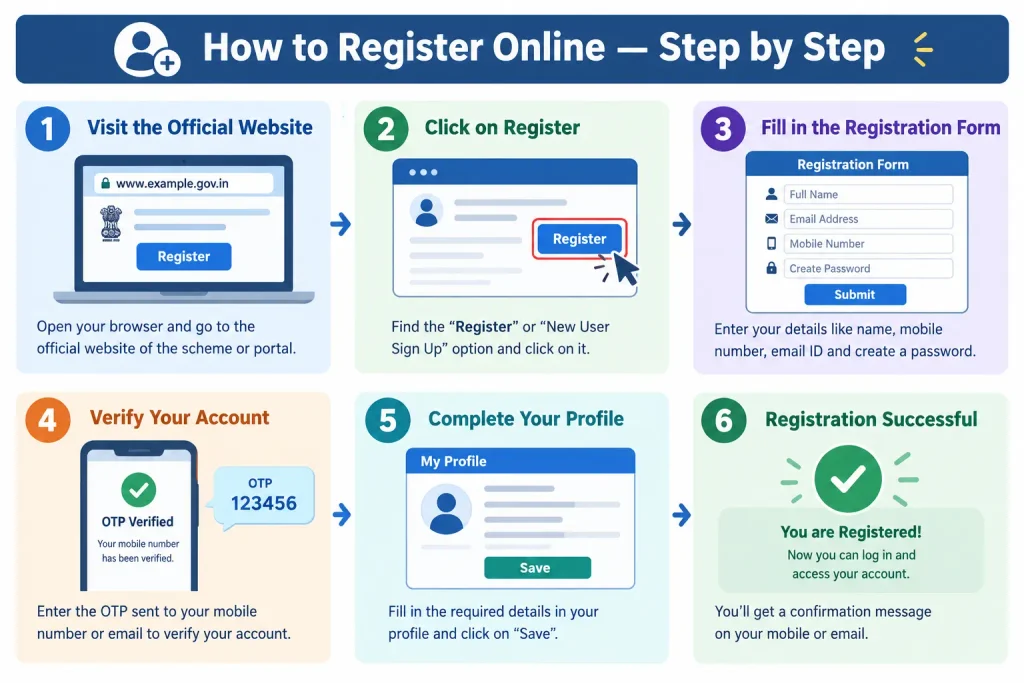
The primary registration route is online through the official 1000 Days portal at 1000d.gujarat.gov.in. The process is short, but a few steps trip people up. Here is what actually happens, including the pitfalls.
- Open the portal and choose Self Enrollment. Go to 1000d.gujarat.gov.in. On the homepage, select the Self Enrollment option. Do this on a desktop or laptop if possible — the portal sometimes behaves inconsistently on mobile browsers, and the Aadhaar validation step can time out on a slow connection.
- Enter your Aadhaar details. You will need your Aadhaar number, your name as printed on the Aadhaar card, and your date of birth. Click Validate Aadhaar. Common pitfall: if your name on the portal does not exactly match your Aadhaar card — a missing middle name, a spelling variation, a married name that differs from your Aadhaar — validation will fail. Use the name exactly as it appears on Aadhaar.
- Select your Anganwadi centre. Ration card details may populate automatically. If your local Anganwadi centre does not appear, you will need to select it from a dropdown or list. Choosing the wrong centre is a frequent error that delays kit distribution — the kit is routed to the centre you select, not the one nearest your home. If you are unsure which centre covers your area, ask your Anganwadi worker before selecting.
- Register and verify your mobile number. Enter a mobile number that is active and with you. You will receive a 4-digit OTP. Pitfall: OTPs sometimes fail to arrive if your number is on DND (Do Not Disturb) or if the SMS gateway is congested. Wait a minute, request the OTP again, and if it still does not arrive, try a different number. Do not proceed without verifying — an unverified application typically does not get processed.
- Add health details. After saving the primary information, the portal will prompt you for health details. These are the details your health centre or Anganwadi worker would have recorded — things like your LMP (last menstrual period) date, expected delivery date, or your child’s birth details. Fill these in as accurately as you can. If you are unsure, your Anganwadi worker can help.
- Submit and save your application. Review the details, confirm, and submit. Print or download the confirmation. This printout is your proof of application and will help if there is a discrepancy later.
After submission, the same portal lets you check application status, view beneficiary details, and reprint your application.
If the Online Process Fails
Not everyone can complete the online form. Slow internet, Aadhaar validation failures, or a missing mobile number can block you. In that case, go to your nearest Anganwadi centre. The Anganwadi worker or supervisor can register you through their system. The scheme runs through ICDS, so the Anganwadi centre is the fallback and often the faster route if you are already in their records.
Documents to Keep Ready
Gather these before you start, whether online or at the Anganwadi centre:
- Aadhaar card — for identity validation. The name and date of birth must match exactly.
- Proof of pregnancy or your first child’s birth certificate — a document from your health centre or hospital confirming your pregnancy, or the birth certificate of your first-born child.
- Health records from antenatal check-ups — your ANC card, MCP (Mother and Child Protection) card, or any record that shows your pregnancy is registered with the health system.
- An active mobile number — for OTP verification. This is non-negotiable for online registration.
- Ration card — not always mandatory, but details may link automatically during registration. Keep it handy.
Carry photocopies as well as originals if you visit the Anganwadi centre. The worker may need to verify against originals and retain copies for the file.
Mistakes That Delay or Block Your Application
- Mismatched Aadhaar details. A single letter difference in your name or a different date of birth format can cause validation to fail. Check your Aadhaar card before you type.
- Wrong Anganwadi centre selected. If your kit is routed to a centre you do not visit, you may not receive it on time — or at all. Verify the correct centre before submitting.
- Unverified mobile number. If the OTP step is skipped or fails, the application usually remains incomplete. Do not close the browser until you see the confirmation.
- Incomplete health details. Missing LMP date, expected delivery date, or child’s birth details can put the application on hold. Fill everything the portal asks for.
- No printed copy. Without a printout or saved PDF, following up on a stuck application becomes guesswork.
FAQs
Who can apply for the Mukhyamantri Matru Shakti Yojana?
Women who are permanent residents of Gujarat and are either pregnant for the first time or mothers of a first-born child under two years of age. You should also be registered with the health system for antenatal care or have your child’s birth recorded.
Is the benefit cash or a food kit?
It is a free monthly nutrition kit containing groundnut oil, tuver dal, and chana. There is no cash transfer. You collect the kit from your Anganwadi centre.
Can I register entirely online?
Yes, through 1000d.gujarat.gov.in. But if Aadhaar validation fails or you do not have a mobile number for OTP, visit your Anganwadi centre — they can register you through their system.
What documents do I need?
Your Aadhaar card, proof of pregnancy or your first child’s birth certificate, and health records from antenatal check-ups. An active mobile number is required for online registration. A ration card helps but is not always mandatory.
How do I check my application status?
Log in to the 1000 Days portal and use the status check link. You can also ask your Anganwadi worker, who can see whether your application has been processed.
Is Aadhaar mandatory?
Aadhaar is used for identity validation during registration. If you do not have one, contact your Anganwadi centre — they can guide you on alternative verification, though the process may take longer.
What to Do If Your Application Is Stuck
If you submitted the form but the Anganwadi centre has no record of your kit, do not wait indefinitely. Take your printed application to the centre and ask the worker to check the portal. If the application shows as submitted but not approved, the issue is usually a mismatch in the Anganwadi centre selection or incomplete health details — both fixable at the centre level.
One practical note: kit distribution follows the Anganwadi centre’s monthly stock cycle. If you register mid-month, your first kit may arrive in the next cycle rather than immediately. That is normal. But if two cycles pass without a kit, follow up in person with your printed confirmation. The Anganwadi worker can escalate it to the supervisor. For the most current rules, kit contents, and timelines, the 1000 Days portal and your local Anganwadi centre remain the two sources that matter.
