
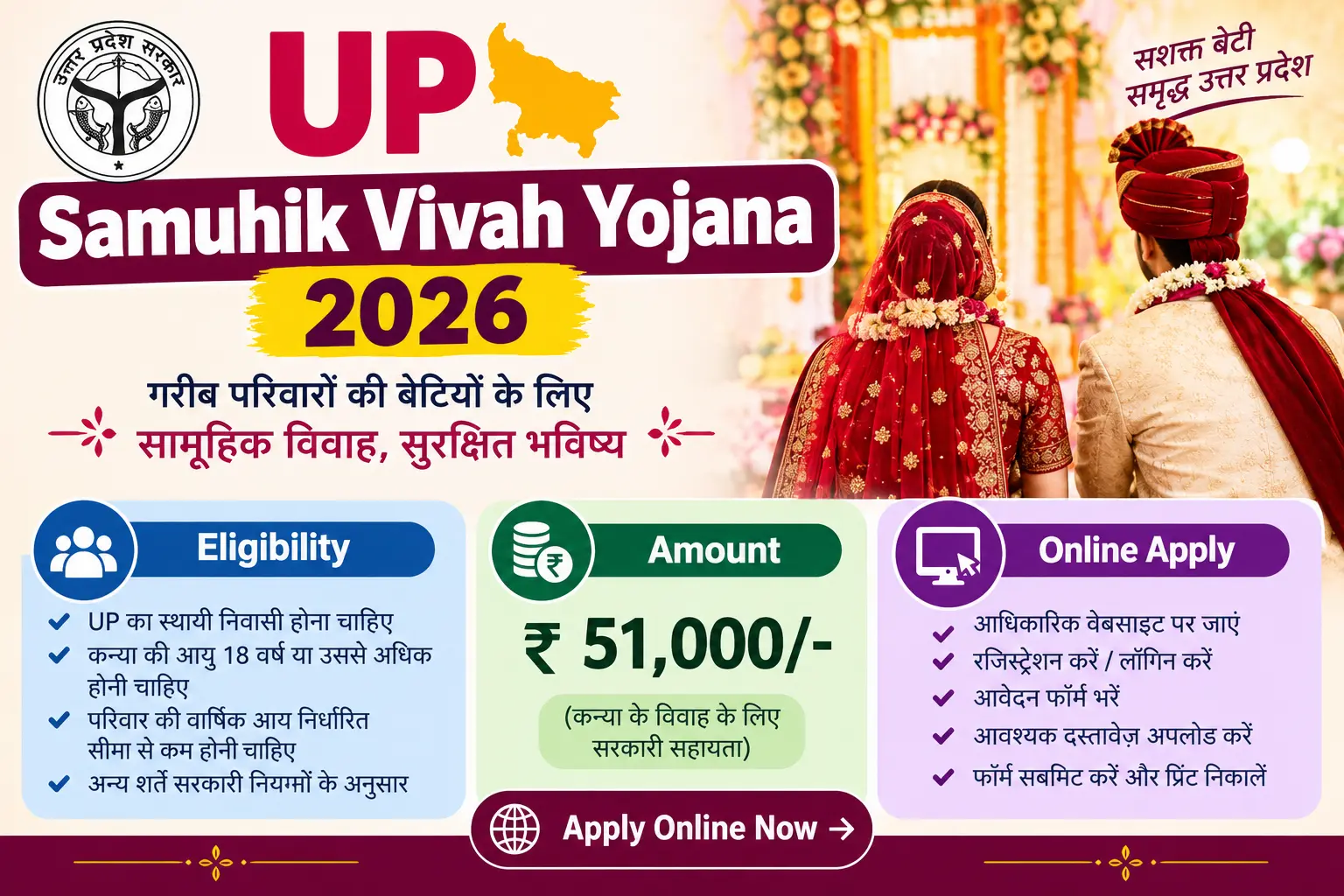
For many families in Uttar Pradesh, a daughter’s wedding is not just an emotional milestone—it is a financial storm. Loans, selling assets, and borrowing at high interest are common. The samuhik vivah yojana up exists to change that. Under this scheme, the state organises mass marriage ceremonies and provides financial and material support, so families can marry their daughters with dignity instead of debt. For 2026, the programme has been widened: assistance has increased, income limits have been raised, and applications can be made both online and through local offices. This guide explains who qualifies, what you receive, which documents are needed, and how to apply without avoidable delays.
What Is the Mukhyamantri Samuhik Vivah Yojana?
The Mukhyamantri Samuhik Vivah Yojana—also called the cm samuhik vivah yojana up—is run by the Social Welfare Department of the Uttar Pradesh government. Instead of each family spending heavily on a separate wedding, the government holds collective marriage events at district and divisional levels. Several couples are married in one ceremony, with arrangements handled by the administration.
The scheme is open to SC, ST, OBC, Minority, and General categories. It also covers the remarriage of widowed and divorced women. Priority is generally given to destitute girls, daughters of widowed women, daughters of disabled parents, and disabled girls themselves.
Discover More About:👇
UP Senior Citizen Card: Eligibility & Documents Required (Kaise Banaye)
Samuhik Vivah Yojana UP: Eligibility Criteria 2026
To apply for the samuhik vivah yojna, you must meet the following conditions. These are commonly required under current guidelines—always confirm the latest rules on the official portal before applying.
Age Requirements
- The bride must be at least 18 years old on the date of marriage.
- The groom must be at least 21 years old on the date of marriage.
Residency Requirement
- Either the bride or her guardian must be a permanent resident of Uttar Pradesh.
Income Limit
- The family’s annual income must not exceed ₹3 lakh. This limit has been raised from lower thresholds in recent years to cover more households. If your income is close to the limit, check the portal for the current figure, as norms are updated periodically.
Category and Priority
- All categories can apply—SC, ST, OBC, Minority, and General.
- Priority is generally given to destitute girls, daughters of widowed women, daughters of disabled parents, and disabled girls.
- A single family can avail the benefit for a maximum of two daughters.
Financial Assistance and Benefits Under Samuhik Vivah Anudan
The samuhik vivah anudan has been increased in recent revisions. At present, the total assistance is commonly described as ₹1.01 lakh per couple, split broadly into three parts:
| Component | Amount | Purpose |
|---|---|---|
| Direct bank transfer to bride’s account | ₹60,000 | Cash support for the bride to start married life |
| Household goods and gifts | ₹25,000 | Utensils, bedding, and other practical items |
| Ceremony expenses | ₹15,000–₹16,000 | Food, tent, and arrangements at the government event |
The full amount is not paid as cash in hand. The ₹60,000 is transferred directly to the bride’s bank account. The remaining amount is used for goods and ceremony arrangements as per departmental rules. In some districts, the household kit has included sarees, a pressure cooker, a stainless steel dinner set, a ceiling fan, mattresses, and similar items. Couples also receive basic facilities at the mass marriage event, such as photography and pandal arrangements.
Amounts and kit contents can vary by district and year. Check the official portal for the current figures.
Documents Required for UP Samuhik Vivah Online Application
Before starting the up samuhik vivah online application, keep these documents ready. Incomplete documents are one of the most common reasons for delays:
- Aadhaar card of the bride, groom, and guardian (mandatory)
- Age proof — birth certificate, educational records, voter ID, MGNREGA job card, or Aadhaar card
- Income certificate of the family (father/guardian)
- Caste certificate (for SC, ST, and OBC applicants)
- Bank passbook of the bride (for direct benefit transfer)
- Passport-size photographs of the bride and groom
- Address proof / domicile certificate confirming Uttar Pradesh residency
Rural applicants typically submit documents at the Block Development Officer’s office. Urban applicants usually go to the Nagar Palika or Nagar Panchayat office.
How to Apply for Mukhyamantri Samuhik Vivah Online: Step-by-Step
The mukhyamantri samuhik vivah online process is straightforward, but a few small errors can cost you a whole cycle. Follow these steps.
Step 1: Visit the Official Portal
Go to the official scheme portal. The commonly used addresses are cmsvy.upsdc.gov.in and shadianudan.upsdc.gov.in. Confirm the live URL through the Uttar Pradesh Social Welfare Department before entering personal details.
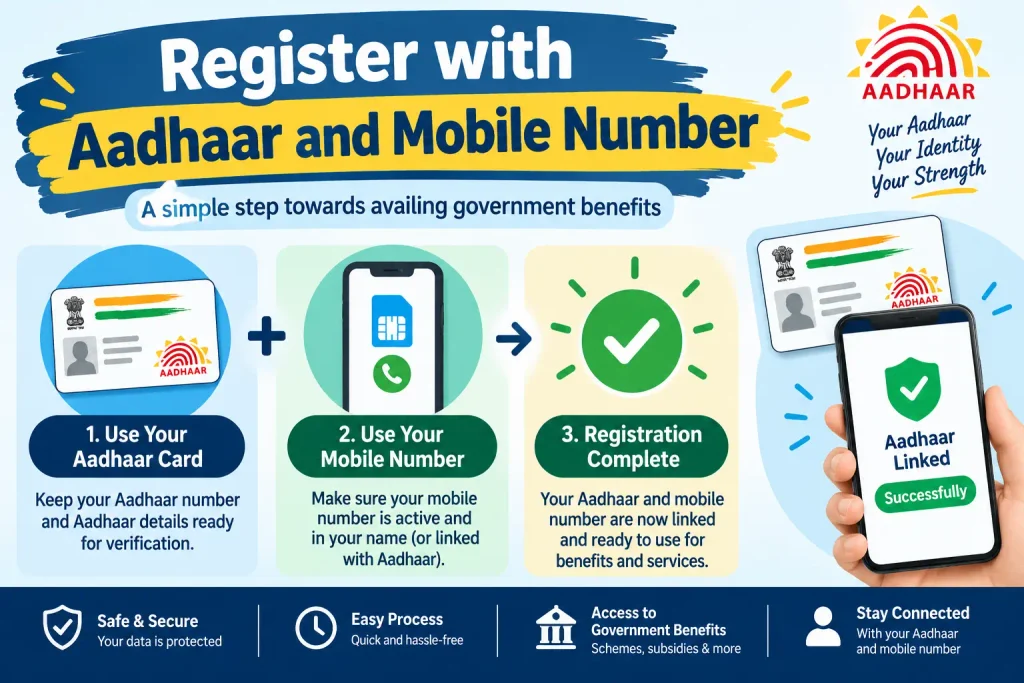
Step 2: Register with Aadhaar and Mobile Number
Create an account using the bride’s or guardian’s Aadhaar number and a registered mobile number. An OTP will be sent for verification.
Common pitfall: If the OTP does not arrive, check whether the mobile number is linked to Aadhaar. If it is not, update it at an Aadhaar centre first. Also wait for the timer before requesting a new OTP—repeated clicks can lock the session.
Step 3: Fill the Application Form
Enter details for the bride, groom, and guardian: names, ages, income, address, and bank account information. For up samuhik vivah yojana registration, the name spellings must match Aadhaar and bank records exactly.
Common pitfall: A single spelling difference—such as “Kumari” vs “Kumary”—can cause verification failure. Cross-check every field before moving on.
Step 4: Upload Documents
Scan and upload the required documents in the accepted file size and format. Blurred or cropped scans are often rejected.
Common pitfall: The portal may time out during upload. Save your application as a draft if that option is available, and keep scanned files ready in a folder before starting.
Step 5: Submit the Application
Submit online. If you are not comfortable with the portal, visit a Jan Seva Kendra (CSC), a cyber cafe, or the District Social Welfare Office (DSWO) for assistance. They can fill and submit the form for you.
Step 6: Verification and Invitation
The Social Welfare Department verifies your documents. Once verified, eligible couples receive an invitation to a scheduled mass marriage event in their district. Updates usually come via SMS on the registered mobile number.
Step 7: Attend the Mass Marriage Ceremony
On the designated date, couples attend the government-organised ceremony. After the wedding, the financial assistance is processed, and an online certificate can be downloaded.
The application window is typically open for a limited period before each event. Apply well in advance and check the portal regularly for district-wise dates.
Common Mistakes to Avoid
- Mismatched names across documents — Ensure the bride’s name is identical on Aadhaar, bank passbook, and the application form.
- Expired income certificate — The income certificate must be current and issued by the competent authority. An outdated one will be rejected.
- Wrong bank account details — Since ₹60,000 is transferred directly, an incorrect account number or IFSC code can delay or bounce the payment.
- Missing the deadline — Each district follows its own schedule. Missing the window means waiting for the next cycle.
- Incomplete or blurred uploads — Re-check every scan before submitting. Partial documents are a frequent cause of rejection.
Frequently Asked Questions
1. What is the income limit for the UP Samuhik Vivah Yojana?
The family’s annual income must generally not exceed ₹3 lakh. This limit has been raised over time, so verify the current figure on the official portal.
2. Can widowed or divorced women apply for the samuhik vivah anudan?
Yes. The scheme covers the remarriage of widowed and divorced women, and their applications are considered.
3. Is there a fee to apply for the samuhik vivah yojana up?
The application itself is typically free. If you use a cyber cafe or Jan Seva Kendra, they may charge a small service fee. Check the official portal for current details.
4. How many daughters in one family can benefit?
A single family can avail the benefit for a maximum of two daughters.
5. Where can I check my application status for up samuhik vivah online?
After submitting, you can track the application on the official portal. Updates are usually sent via SMS on the registered mobile number.
6. What is the bride’s age requirement?
The bride must be at least 18 years old on the date of marriage.
Closing Thought
If your district has no mass marriage event listed yet, do not assume your application has been rejected. Contact your District Social Welfare Office and ask when the next camp or ceremony is scheduled. Also keep your income certificate and Aadhaar details updated—if the certificate expires before the next cycle, you may have to start the paperwork again. Applying early gives the department time to verify documents and reduces the risk of missing a ceremony date.
